
University of Portsmouth helps the fight against illegal animal trafficking
THE city’s university is joinoing the fight against the illegal trade of endangered animals with a finger print technique to help identify smugglers.
A team of scientists from the University of Portsmouth have adapted a gelatine technique, usually used for lifting finger and footprint marks at crime scenes, to be applied to an animal’s skin and scales to allow it to be scanned for fingerprint details.

It’s believed to be the first time the technique has been used in wildlife crime.
The results of the technique have been positive with examination of the gelatine showing fingerprint identification in 74 per cent of cases.
The university is providing training workshops for wildlife officers in parts of Africa and Asia where there has been a problem with illegal trafficking. It’s hoped that adopting this practice will help authorities to identify poachers and traffickers and bring them to justice.
Dr Brian Chappell, senior lecturer in criminal investigation at the university, said: ‘We found that wildlife crime officers across Africa and Asia have extensive expertise and knowledge in relation to the wildlife, the crimes committed and the behaviour of the traffickers, but they had little experience of forensic methods.
‘There was a lack of suitable resources and forensic evidence was not used to its full potential. Complex technologies and intricate scientific methods were not suitable to the working environment of the wildlife enforcement officers, therefore easy to use, inexpensive methods were required.’
SEE ALSO: Portsmouth College recognised by Sixth Form Colleges Association for giving students a flying start
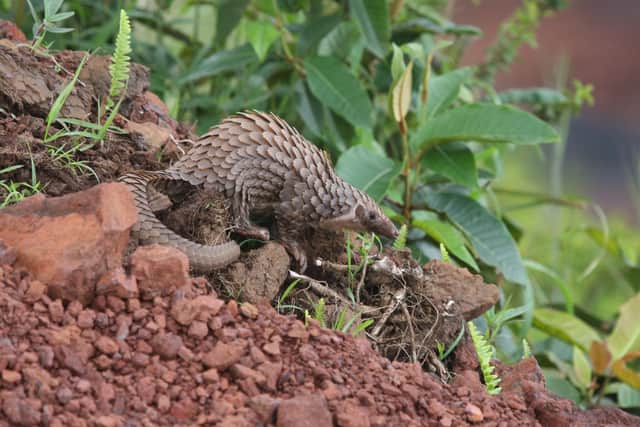
The initial trials were carried out on pangolins, an endangered species which has recently been linked to the spread of coronavirus after being sold in wildlife markets in China where it’s considered a delicacy.
With an estimated 2.7 million of the animals poached every year the pangolin is in danger of extinction.
Dr Paul Smith, director of the Forensic Innovation Centre at the University of Portsmouth, said: ‘The low-tack adhesive gelatine lifters have been used in forensic practice for over 100 years but we adapted bespoke packs and lifted evidence successfully off pangolin scales.
‘This technique was easy to use, effective and suitable for practice. It equips the wildlife crime rangers and has the potential to be a deterrent to would-be traffickers.’