
Summer heatwaves: UK schools got ‘worryingly hot’ this term - with temperatures above safety guidelines

This summer term has been almost too hot to handle in some classrooms 🔥
- It’s been a swelteringly hot summer for much of England so far this year, with multiple heatwaves
- New research found temperatures soared well above a key safety guideline in several classrooms across the country
- In one case, it crept to nearly 30C during school hours - close to where children were sitting
- The Government says it is investing billions in rebuilding and climate-proofing hundreds of schools over the next decade
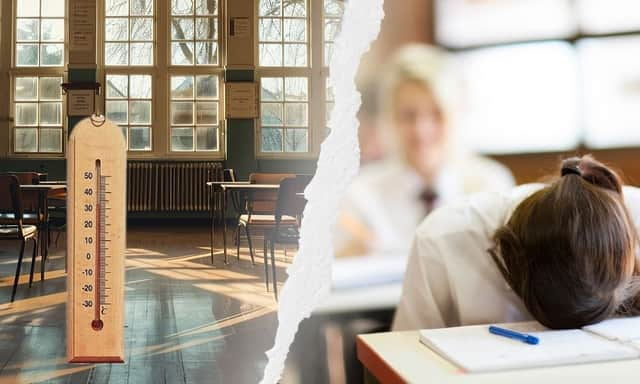
Pupils faced “worryingly hot” temperatures in classrooms this term - exceeding 36C in one school.
Teachers have told of stifling schoolrooms with no chance to cool down between classes, as new data finds that inside temperatures crept above safety guidelines at some schools during recent heat spikes.
In June, climate non-profit Round Our Way worked with teachers in four schools across different parts of the country, placing temperature sensors that automatically recorded the temperature every hour over a period of four weeks. They found that every school involved in the study saw temperatures regularly top 26C – the National Education Union’s (NEU) recommended maximum temperature for classrooms - in one case, by more than ten degrees.
Last month was England’s warmest June on record according to the Met Office, with parts of the country experiencing two heatwaves that month. The historic highs haven’t let up since, with this July bringing even more heatwaves – and the year’s highest temperature to date, when the mercury hit 35.8C on July 1 in Faversham, Kent, the BBC reports.
Meanwhile, climate scientists for the forecaster have warned that it may get worse still, with studies showing it’s virtually certain that human influence has increased the frequency and intensity of extreme heat events. The Met Office’s own projections indicate that hot spells will become more frequent in our future, especially over the UK’s southeast.
But just how hot did classrooms get during England's most recent warm spells – and what is the Department for Education doing to protect young learners? Here’s what you need to know:

How hot did classrooms get this term?
Of the four schools measuring in-class temperatures, a primary school in Liverpool was the hardest hit. Its temperature sensor – placed on a shelf near a window – reached a sweltering high of 36.3C just after 3pm on Thursday, June 19. Outside, it was 28.2C at the time.
The other three classrooms also surpassed the NEU classroom safety recommendations too at various points. A primary school in Reading hit 34.8C on Thursday, June 26, while it was just 22.9C outside.
Meanwhile, a secondary school classroom in Cambridgeshire heated to 29.9C on Friday, June 20, shortly after 1pm. In this case, the sensor was placed on a front desk near to where children sat. A Cumbria-based secondary school classroom rose to a high of 26.8C that same day – with its sensor above the whiteboard and out of any direct sunlight.
Simon, a Lake District teacher, works at a school with no air conditioning – and many windows that didn’t open fully for safety reasons. “The constantly high day and night temperatures that we have seen in the past have a compound effect on the room temperatures… They simply do not get a chance to cool.”
But he said teachers just had to get on with it. “After every hour there are another 30 kids queueing for the next lesson with no opportunity for the room to cool down. What else can we do?”
Round Our Way director Roger Harding said their new data showed the “worryingly hot” temperatures our children are starting to face in the classroom due to climate change. “Schools, like many of our buildings, aren’t set up and funded to deal with the higher temperatures we are seeing... The weather used to just be small talk but we now need our political leaders to ensure the country is better prepared for more extreme weather and tackle the fossil fuel pollution that is causing it in the first place.”
What are the rules and recommendations for schools during extreme heat?
The NHS says that children are more susceptible to the effects of extreme heat, including health problems like heat exhaustion or heatstroke. Although there is currently no specific legal maximum temperature for classrooms, headteachers are able to send children home if they believe the heat is becoming a risk to their safety.
However, the NEU – one of the country’s largest education unions – recommends classrooms be kept below 26C so children can focus on their work and avoid heat stress. Health, safety, and environment lead Sarah Lyons said these latest findings were concerning, but not surprising.
“Quite apart from it being impossible to concentrate and learn when heat becomes excessive, children are more at risk of becoming ill with heat-related conditions than adults,” she added. “As summers like the current one become increasingly common, many more schools will need to be supported to adapt to our changing climate.”
What is the Government doing about it?
A Government spokesperson told us that climate change is a universal issue, but “we are taking action to understand the potential impact on education so we can prevent disruption to learning”.
As part of Labour’s Plan for Change, the Government’s 10 Year Infrastructure Strategy included almost £20 billion set aside up to 2035, to rebuild more schools across England. More than 500 have already been selected under the School Rebuilding Programme, they continued, with an extra 250 further schools still to be chosen.
“They will be schools for the future, net zero carbon in operation and designed to withstand future climate risks including increasing summertime temperatures,” they added. “That’s alongside investment of almost £3 billion per year by 2034-35 in capital maintenance and renewal to improve the condition of the school and college estate.”
A recent Government climate risk report said at the moment, schools typically experienced one or two days per year where indoor classroom temperatures reached 35C and learning became difficult. But in a worst-case scenario where schools didn’t adapt and without global climate action, children could lose the equivalent of eight days of learning by 2050, and over 11 days by 2100.
If you’re interested in learning more about the impacts climate change could have on children’s schooling, from heatwaves to flooding, check out our coverage of the Department for Education’s latest climate risk assessment. You can find it online here.