
My story as a Stem Cell Donor; spreading hope and raise awareness of the Stem Cell Register World Blood Cancer Day 2025


Reading my latest letter from the patient I donated stem cells to last summer, I am filled overwhelmingly with humility, relief and happiness. I don't know this person I have been talking to but we have this strange emotional connection now. They thank me endlessly for giving my time to donate, for being on the stem cell register in the first place, for giving them hope when their world had been turned upside down. We have exchanged letters twice since. I am thrilled they want to keep talking and I am enjoying hearing of their progress. They are one of the lucky ones, now in remission.
The Stem Cell Register is a national database consisting of potential stem cells donors. Sometimes blood cancer patients or patients with blood disorders need a stem cell transplant for a full recovery, it's a bit like getting a new immune system. People from far and wide generously provide a DNA sample from swabbing inside the cheek and registering their details with charities like DKMS or Anthony Nolan or through the National Blood and Transplant Services Stem Cell Register. According to DKMS 40% of patients won't find their match on the stem cell register . Upon diagnosis family are tested first for compatibility but only 30% will find a compatible match in their own family and it is most likely to be a sibling. Stem cells are remarkable cells produced in bone marrow, they are special because they can develop into specialised cells within the body and regenerate themselves to repair and replace other cells so this is really important after powerful cancer treatments such as chemo.
My 'genetic twin' describes to me how relieved they are to have some normality back now. Some normal routine after the long, hard , anxiety-ridden hospital stays of last year. They tell me of their plans for the future. This time last year, they couldn't make plans- they had no idea what was coming next.
Life is two sides of the same coin; around this time last year I had been identified as a potential match for this person.
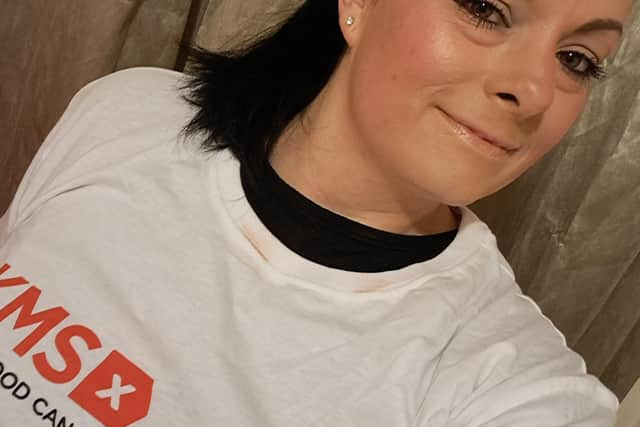
I had been on the stem cell register five years , I've been donating whole blood as and when I could since I was seventeen and after learning more about stem cell donation I signed up to the stem cell register. I ordered a home swab test from DKMS , swabbed around the inside of my mouth , filled out a few details and posted back to the lab. The process took ten minutes. Then I carried on with life!
Rewind to last spring ,out of the blue I got a call telling me there was a real possibility I could help give someone a second chance of life. I was excited and a little apprehensive but eager to help I consented to the Confirmatory Typing Process ; a health screen questionnaire followed by an initial blood test confirming genetic compatibility with the patient. Often several potential matches are sought on the register and it's a case of doctors establishing the best match for the patient as their body could reject the donation if it's not right. This is complex, it is not as simple as matching blood groups, they are matching genetics based on specific proteins markers within the cells and then assess the donors general health and background (phenotype) through the health screen . I was confirmed as the best match so was scheduled a physical examination with specialists.
Here I was given a full MOT! They performed a blood count of all my cells, and screened for viruses; they tested my kidneys, heart and lungs and I was physically examined. The doctors are incredibly thorough as they have a duty of care to ensure as a donor you are medically fit to donate as well as ensure the donation is the best quality for the patient who is obviously very sick.
Having passed this , I was booked for donation! I was that 1 in 800 people that could donate and I felt privileged that I was in a position of good health meaning I was able to actually help.
Meanwhile on the flip side our patient was going through 'conditioning' a process where they are subjected to chemotherapy to irradicate the bad cells on preparation for my stem cells to be transplanted. The hope is my donated stem cells will rebuild a new immune system for the patient and they will recover. Whilst the whole process is voluntary and informed consent is instrumental through the whole process , commitment at this stage is pivotal . There would be huge repercussions for the patient if the donor pulls out as this stage.
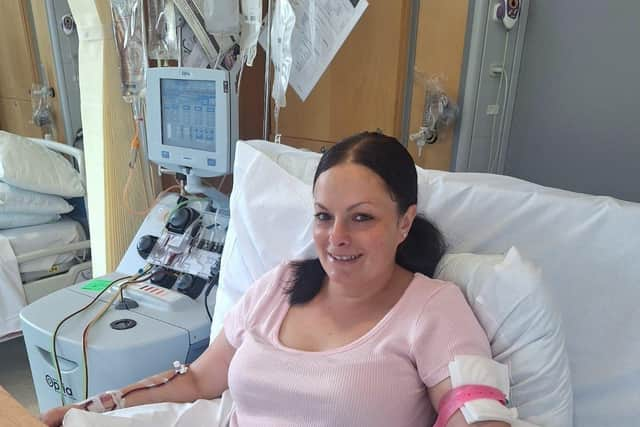
So last summer, I successfully donated via Peripheral Blood Stem Cell collection. This method collects stem cells from circulating blood; it is very similar to platelet donation , an apheresis machine separates the stem cells and plasma and returns the rest of the blood back to donor. The process can take up to six hours depending on how many stem cells the patient requires. Four days prior I had to inject growth hormone stimulant daily into my abdomen prescribed by the doctor to stimulate mass production of stem cells so collecting would be straightforward. This actually doesn't hurt as you inject subcutaneously into the fatty tissue . Temporary side effects whilst taking the medication were feeling like I a had slight cold, oddly enough upon donation this completely disappeared like magic! It's important to take the meds properly as if they can't collect enough stem cells on the day you may need to return a second day to complete donation, though most cases are completed in a day.
90% of cases are donated via PBSC , it is painless , similar to donating like I am used to and required me to simply sit in a comfy bed for four and a half hours whilst being fed and cared for very well by the lovely nurses , who were very good company! Alternatively 10% of people will donate directly from the bone marrow, this procedure is performed under aesthetic and would require a short stay in hospital. The method of donation is unique to the patient's needs and prognosis .
All through the process I was just thinking of my patient, trying to imagine what it must feel like to just be waiting and hoping. As we glanced out the window we could see the Blood Runners outside the hospital , waiting to take raw tissue to the necessary places. The donation was successful I was really tired afterwards and a bit emotional, I guess sitting in the hospital with all that time on my hands suddenly the enormity of the situation hit and had made me quite reflective. I went back to my hotel and rested the night . I was advised to consume lots of calcium the next few days to counteract the effects of the anticoagulant used during donation to prevent blood clots, to expect tiredness over the next few days but within a week to feel normal and my stem cells would recover themselves with two weeks but I would have a blood test a month later to check this with my own GP. The charity arranged my two night hotel stay for myself and husband, they arranged the travel too. They would also fund any time off work if needed .
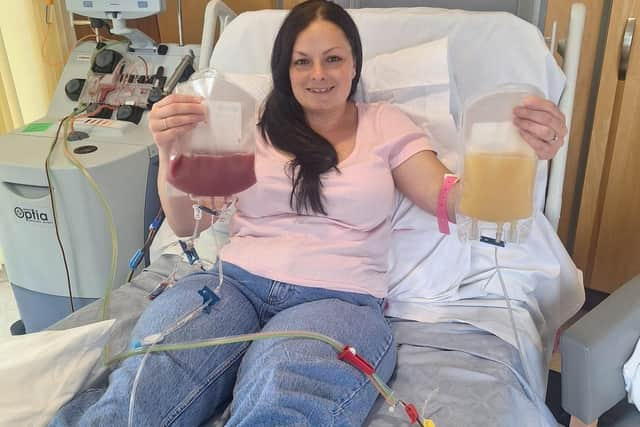
My own health checks are all good since last year and I have even continued donating plasma several times since the end of last year and recently given my first whole blood donation in 18 months.
Stem cell donations aren't always guaranteed to work. Some patients need multiple transplants and still don't survive, the nature of blood cancer is unpredictable. But stem cells are an incredible gift to give if you can. I donate because family is everything to me, and just like me my 'genetic twin' is part of someone's family too. I would hope if it were my child, my mum or dad, my brother or sister there would be a match for them on their register . There is nothing more amazing than to give the gift of life!
I want people to understand what the stem cell register is, the process of donation and how simple joining the register is because I have seen first hand how necessary it is. Most people between 17 and 55 in good general health can join. You may never be called , but just existing on the register brings so much hope for people going through the worst time of their life, potentially facing their own mortality and their families who feel helpless.
DKMS work internationally and with the likes of the Anthony Nolan Trust (UK) and the National Health Blood and Transplant Services Stem Cell Register raising awareness, supporting blood cancer patient's and their families and sharing databases to increase the likeliness that all affected by blood cancers and disorders will be able to find a compatible match should we be unluckily enough to have to turn to the stem cell register one day.
Nearly a year post-donation now I'm so thankful I could help our patient. I wish them well in their recovery and rebuilding their life . Although we are strangers somehow we are bound by this experience and I feel honoured to have been a part of such an intimate journey with someone I have never met. Let's not take life for granted, life is a blessing and tomorrow is never guaranteed. A little bit of kindness and generosity can truly go a long way and you never know when you'll be on the receiving end of a stranger's generosity.
If you've taken the time to read my story, I thank you whole heartedly. World Blood Cancer Day is on the 28th May, why not do something amazing? Help spread hope ! Check out the following websites for more info/support, ideas to fundraise, donate money or join the register.
www.dkms.org.uk
www.anthonynolan.org
www.nhsbt.nhs.uk