
Historic Garden Restoration at Fishbourne Roman Palace
Fishbourne Roman Palace, Eradipest, and the European Boxwood and Topiary Society (EBTS) are pleased to announce the successful restoration of the historic box hedges at Fishbourne Roman Palace and Gardens, Britain's largest Roman home.
The gardens at Fishbourne, which feature the earliest formal gardens in Britain, were under threat from a severe infestation of box hedge caterpillars in spring 2024. These gardens, meticulously recreated based on archaeological evidence, are a crucial part of the site's historical significance.
Dr. Rob Symmons, Curator at Fishbourne Roman Palace, stated, "The Palace is home to the oldest formal garden in Britain and possibly the only example worldwide of a garden planted into holes originally dug by the Romans nearly 2000 years ago. The threat posed by box moth to this nationally important asset was of great concern."
Collaborative Effort


Thanks to a swift and coordinated response from Eradipest and the generous support of the EBTS, the hedges have been saved. The EBTS provided a donation to cover the treatment costs after visiting the site and witnessing the extent of the damage.
Expert Treatment
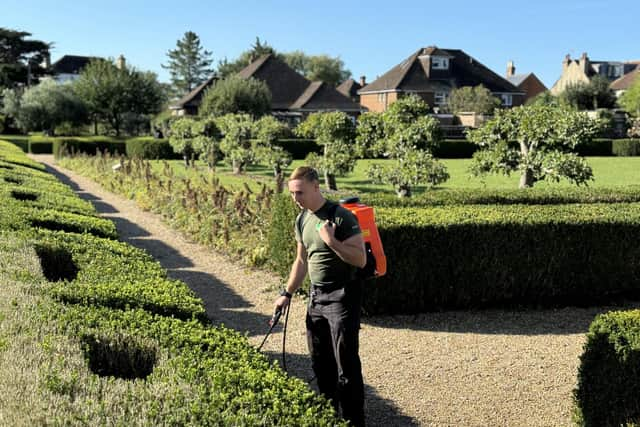
Eradipest conducted a series of treatments over several months, employing their expertise in pest control to combat the infestation. Tim from Eradipest commented, "It gives the Eradipest team great pleasure to see the historical box hedges flourishing again. We are thrilled to be a part of keeping the plants healthy and pest-free for all to enjoy."
The treatment process involved multiple visits and close collaboration with the Fishbourne team to ensure the hedges' recovery and long-term health.
Remarkable Recovery
By September 2024, the hedges had been restored to their former glory. Penny Horsfield, Office Manager at Fishbourne Roman Palace, expressed her amazement at the results: "We thought we'd lost them – Eradipest has performed a miracle!"
Historical SignificanceThe box hedges at Fishbourne are not just ornamental; they represent a living link to Roman Britain. Planted in trenches visible in the subsoil during 1960s excavations, they reflect the decorative style used by the Romans and play a crucial role in visitors' understanding of the site's history.
Looking to the Future
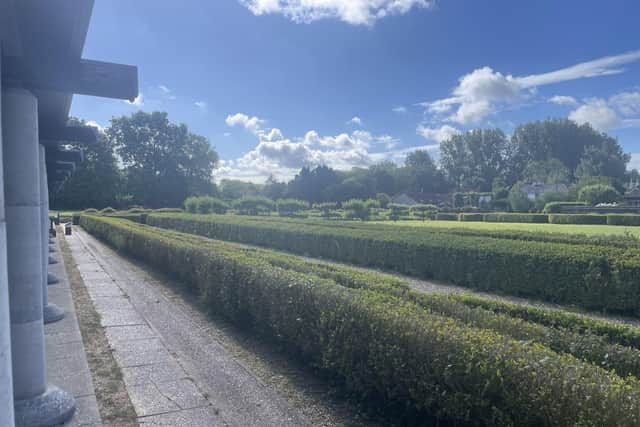
This successful restoration ensures that future generations can continue to experience and learn from this unique historical garden. Dr. Symmons added, "Thanks to Eradipest and the generosity of the European Boxwood and Topiary Society, the hedges have survived, and we can continue to share the story of this amazing place into the future."