
Havant manufacturer Apollo designs new style of face visors and urges others to use the designs
A FIRE detector manufacturing firm is encouraging others to join the fight to produce personal protective equipment for NHS staff working directly with coronavirus patients.
Havant-based Apollo Fire Detectors has produced files for a 3D printed and soft tooling face visor, which it is encouraging firms to use to create PPE wherever possible.
The designs are an adaptation of existing blueprints for facial visors that are being widely produced across the country.
These new designs allow the masks to be repositioned depending on the use, so as to avoid the user having to take it off completely.
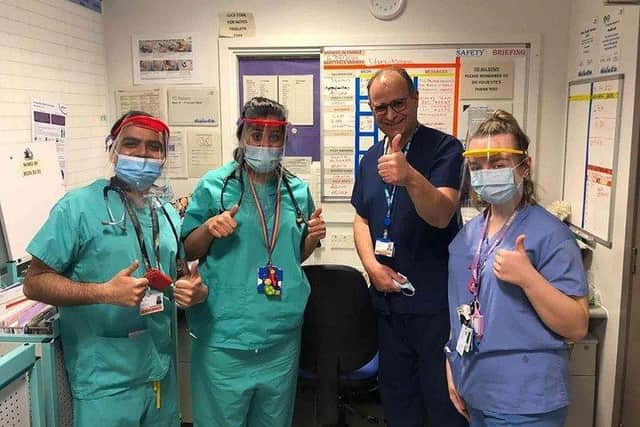

The firm launched the project at the beginning of April after being approached by Professor Shakeel Shahdad, who is working with Barts Health NHS Trust, which is involved with the Nightingale Hospital in London.
The designs are available for download online and Apollo’s global technical director Karl Westhead is urging others to use them when creating the 3D prints.
He said: ‘With colleagues from across Halma, Apollo has supported a redesign of the face shield, which allows the wearer to easily raise and lower the visor. This appears to be unique and more user-friendly.
‘We hear about other areas that are struggling to get PPE, so it is important to share this in the hope that others use it, because the designs have the advantage of being able to increase or decrease the amount of protection without having to take it off completely off the face.
‘We’ve all been affected by Covid-19, and we all want to help. This is a way that we can contribute.’
Apollo, which manufactures fire detectors, has worked alongside five other companies within its mother company, Halma including intruder alarm manufacturer, Texecom, elevator safety firm, Avire, water testing firm, Pailntest and fire detection specialists, FFE.Karl enlisted the help of two other firms, which the company paid to manufacture the parts.
The firm has now Shipped over 2,000 3D prints and 4,000 plastic parts, with a further 6,000 plastic parts being delivered next week, completely free of charge.
The unique design is going through rapid approvals by the British Standards Institution.