
Portsmouth’s new touring play reveals the local inspiration behind the gothic horror
A new touring play, described by audiences as a “rip-roaring gothic mystery,” reveals the Portsmouth connections that have shaped its spine-tingling story.
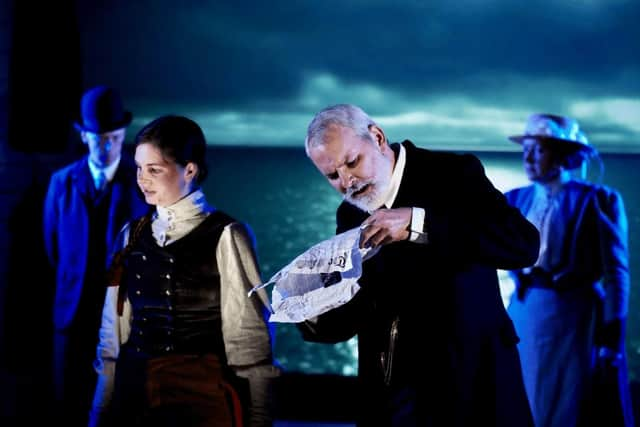
A Summons in the Night, set in Portsmouth Harbour in 1889, follows American adventurer Irene Hunter (Poppy Lowles), touring theatre manager Bram Stoker (Vin Adams), and local physician Arthur Conan Doyle (Scott Ramsay) as a deadly force from an ancient Egyptian sarcophagus is unleashed across the streets of Victorian England.
“Much of what is told in the play actually happened, but we’ve woven in a supernatural Gothic-Egyptian cobweb,” said Scott, who not only acts in the play but also serves as its writer and director. “Even the characters we portray were historical figures who played a part in Portsmouth's rich and diverse history.”
The real Sir Arthur Conan Doyle first moved to Portsmouth in 1882 and established a medical practice at 1 Bush Villas on Elm Grove. During the quiet periods of his practice, he began writing stories, eventually creating the iconic character Sherlock Holmes. His time in Portsmouth was instrumental in shaping his literary career, with many believing that the city influenced some aspects of his storytelling, including its vibrant, bustling atmosphere and rich maritime history. Conan Doyle remained in Portsmouth until 1890 and wrote his first two Sherlock Holmes novels, A Study in Scarlet and The Sign of Four, during his time in the city.

Scott continued: “Portsmouth and its harbours left a significant mark on Conan Doyle’s work, and in turn, his stories went on to influence the world. Even Bram Stoker, famed for creating the iconic Dracula, was inspired by Portsmouth. He was a regular visitor, both in business and pleasure, and his works drew inspiration from Victorian England, including the 'Egyptomania' craze which influenced Stoker's writing, especially The Jewel of Seven Stars, a novel steeped in Egyptian mysticism. Egyptomania really was everywhere, and many plundered artefacts came through Portsmouth, including the Rosetta Stone.”
Another well-known figure who appears in the play is Ellen Terry, one of the most famous actresses of the Victorian era, played by Nathalie Gunn. With family roots in the dockyard and the taverns of the town, the Terry theatrical dynasty started here in Portsmouth, and Ellen would maintain her relationship with the place through its theatres.
“During the late 19th century, Portsmouth had a thriving theatre community that often hosted renowned actors and actresses,” said Scott. “Ellen Terry performed in touring productions that visited Portsmouth's theatres, such as the Theatre Royal, solidifying the city's reputation as a hub for Victorian theatre.”
A Summons in the Night, presented by cultural champions People and Stories, debuted at The Dockyard Club in Southsea on 21 September, followed by Alverstoke Parish Centre in Gosport on 26 September and St. Michael’s and All Angels Church in Portsmouth on 27 September.
Upcoming performances will include St. Luke’s Church in Portsmouth (3 October), Park Community Theatre in Havant (11 October), Christ Church in Portsdown (12 October), St. Faith’s Church in Gosport (17 October), Buckland Community Centre in Portsmouth (18 October), Staggeringly Good Brewery in Portsmouth (18 October), D-Day Memorial Hall in Fareham (8 November), The Dockyard Club in Portsmouth (8 November), Thorngate Theatre in Gosport (15 November), and Bedhampton Community Centre in Havant (16 November).
Geraldine Poulter, who saw the performance in Gosport, said: “Do not miss it, it’s the best play I’ve seen in ages,” while Fizle Sagar, who attended the opening night in Southsea, said: “It was such a fun and great production, go see it and find out stuff you never knew about Portsmouth.”
A Summons in the Night is supported using public funding by Arts Council England, Portsmouth Creates, and Creative Harbour Community Venue Network.
For more information, please visit: www.peopleandstories.co.uk